How to cook pink oyster mushrooms
Last updated
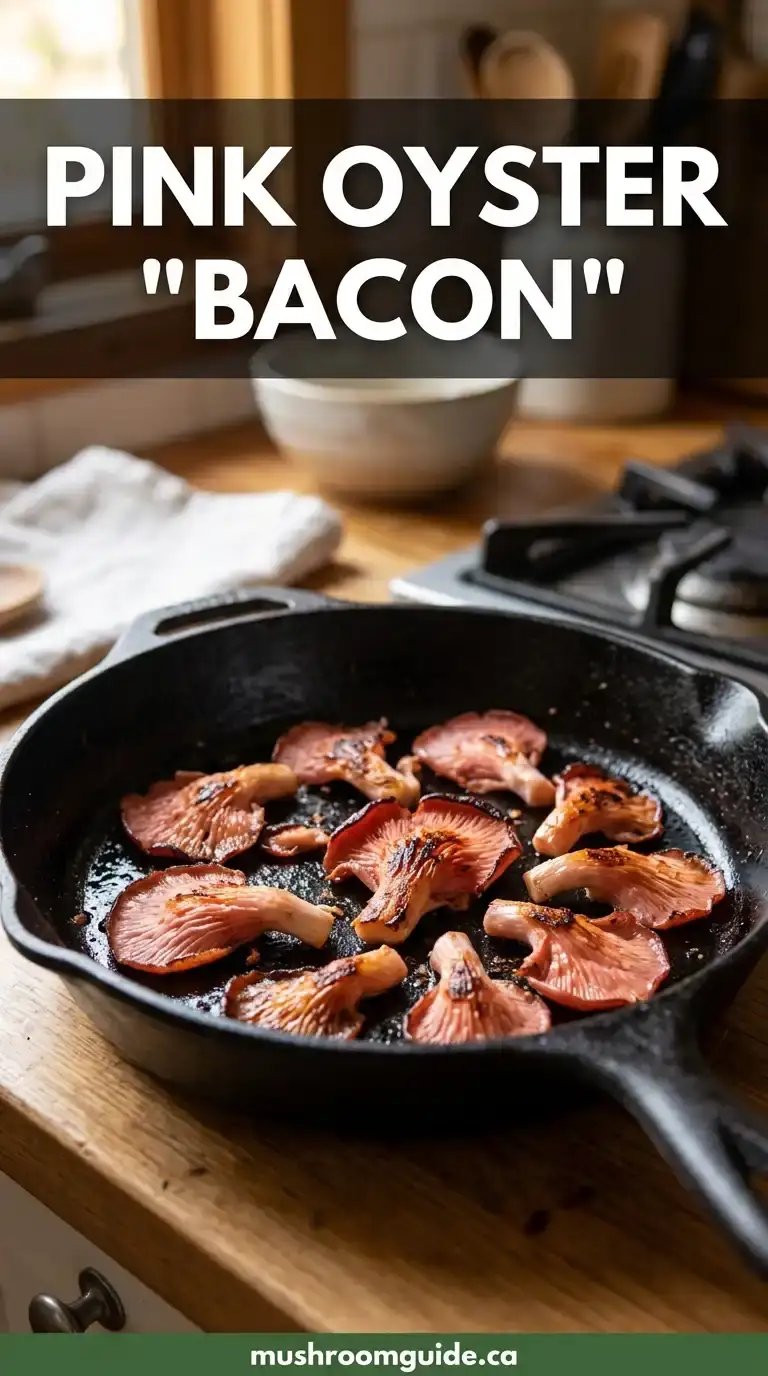
Pink oyster mushrooms (Pleurotus djamor) come with a reputation: people call them the “bacon mushroom” because cooked right, they develop a deep, savoury, almost meaty flavour with crisp edges and a slightly smoky aroma. Cooked wrong, they’re sour, mushy, and faintly fishy — and half the recipes online get them wrong.
This post is about getting them right. The technique is specific to pink oysters; what works for grey oyster, king oyster, or button mushrooms will not give you the same result.
TL;DR
- Dry-sauté first, then add fat. Skip the oil at the start.
- High heat — don’t be timid. Cast iron or carbon steel, fully preheated.
- Tear, don’t slice. Torn edges crisp better.
- Salt at the end, never the beginning.
- Cook them the day you harvest or buy them. Pinks don’t store well.
- Don’t wash them. Damp paper towel only.
The technique
What you need (for 250 g of pink oysters, ~2 servings)
- 250 g (about 8 oz) fresh pink oyster mushrooms
- 1½ tbsp neutral oil with a high smoke point (avocado, sunflower, light olive)
- ½ tsp flaky salt — added at the end
- Optional finishers: black pepper, a small splash of soy sauce, a few drops of maple syrup, fresh thyme
Method
- Trim the cluster at the base. Tear into strips roughly the size of a slice of bacon — about 1 cm wide, 5–8 cm long. The torn edges are what crisp.
- Wipe clean with a barely-damp paper towel if needed. Do not rinse. Pink oysters are sponges and waterlogged mushrooms will never crisp.
- Heat a cast-iron or carbon-steel pan dry over medium-high heat for 3 minutes. Pan should be visibly hot — a drop of water flicked on it should evaporate in under a second.
- Add the mushrooms with no oil. Spread in a single layer. They will hiss, release water, and start to shrink. Don’t stir for the first 3 minutes — let them release moisture and develop a sear.
- Toss once, then cook another 2–3 minutes until the pan is dry and the edges are dark gold.
- Now add the oil, drizzled around the edge of the pan. Toss to coat. Cook another 2–3 minutes until the mushrooms are deeply browned, with crispy edges.
- Salt with flaky salt, off the heat. Add finishers if using.
Total cook time: 8–10 minutes. The first half drives off water, the second half browns. Skip the first half and you’ll get steamed, not crispy.
Why dry-sauté first?
Pink oysters are ~88–92% water by weight. If you add oil to a cold or wet pan first, the oil emulsifies into the released water and you end up boiling instead of frying. The mushrooms cook through but never brown.
Dry-heating drives off the water first, then the oil hits dry, hot mushrooms and they sear. This is also why a thin pan won’t work — you need cast iron or carbon steel that can absorb and re-release heat.
The three mistakes that kill pink oysters
1. Washing them
The number one mistake in every “how to cook pink oyster” post that gets it wrong. Pink oysters absorb water dramatically — a 30-second rinse can add 15–20% to their weight. That trapped water steams the mushroom from inside, and no amount of high heat will rescue it.
If the mushrooms came with substrate residue, wipe with a slightly damp paper towel. That’s enough.
2. Slicing instead of tearing
Knife-cut edges are flat and smooth. Torn edges are jagged, and jagged edges crisp better — more surface area, more browning, more textural contrast with the interior. This is the same physics that makes torn croutons better than cubed ones.
3. Salting at the start
Salt pulls water out of mushrooms. If you salt before they hit the pan, you spend the first 5 minutes of cooking driving that water back off, which is wasted time and wasted heat. Black pepper, dried herbs, garlic powder — all fine to add before. Salt goes on after.
Variations
Pink oyster “bacon”
The famous one. Cook as above, then in the last 2 minutes of cooking toss with:
- 1 tsp maple syrup
- ½ tsp smoked paprika
- ½ tsp soy sauce
- Pinch of black pepper
Let the sugar caramelize for 30 seconds, then plate immediately. Excellent on toast with avocado, in a BLT, on a grain bowl, in a breakfast sandwich.
Pink oyster “carnitas”
Tear smaller — into shreds the size of pulled pork strands. Cook as above, then in the last 2 minutes add:
- ½ tsp cumin
- ½ tsp smoked paprika
- 1 tsp lime juice
- ¼ tsp salt
- Fresh cilantro at the end
Serve in tortillas with pickled red onion, lime, hot sauce.
Pink oyster scampi
Cook plain as above. In the last minute, add:
- 2 cloves garlic, sliced thin
- 2 tbsp butter
- Squeeze of lemon
- Pinch of red chili flakes
Toss with pasta, finish with parsley. Don’t add the garlic earlier — it will burn before the mushrooms are ready.
Pink oyster soup garnish
Cook plain, salt, then layer on top of a creamy soup (potato leek, roasted red pepper, butternut squash) for visual contrast and crunch. The pink colour fades to amber-brown during cooking but the texture holds.
Common questions
Do they actually taste like bacon? Yes and no. The flavour is meaty, savoury, slightly seafood-like (some say “lobster-like”) with the right cook. It’s not literally bacon but it scratches the same itch as bacon does — fatty, salty, crispy, umami-rich. People raised on smoky North American bacon will find it less smoky than bacon; people who like dry-cured European bacon will find it closer.
Can I use frozen pink oysters? You can but the texture will be worse. Frozen mushrooms release a lot of water when they thaw. If you must use frozen, skip the dry-sauté step and accept that they’ll be more like a stew vegetable than a crispy garnish.
What about pink oyster powder? Dried, ground pink oyster mushrooms make an excellent umami booster for soups, stocks, seasoning blends, and even pasta water. Not the same texture experience but the flavour is concentrated and shelf-stable.
My pink oysters smell fishy. Are they bad? Probably yes. Fresh pink oysters should smell mild and faintly sweet — slightly seafood-like in a pleasant way. A fishy or sour smell is the first sign of bacterial spoilage. Compost them and order fresher next time. See our pink oyster harvest guide for why pinks spoil faster than other oysters.
Storing leftovers
Cooked pink oysters keep 4–5 days in the fridge in a sealed container. To revive crispy texture, reheat in a dry hot pan for 2 minutes or in an air fryer at 380 °F for 3 minutes. Don’t microwave — they become rubbery.
For longer storage, pink oysters dehydrate well. Slice or tear, dry at 50 °C / 125 °F for 6–8 hours until snap-crisp, store airtight for 6+ months. Rehydrate in warm water for 15 minutes before cooking.
What pan?
If you’re serious about this technique, a 10–12 inch cast iron or carbon steel pan is the right tool. Stainless steel works if it’s heavy-bottom. Nonstick will not develop the same crust — the surface is too slick to grab the mushrooms for browning.
Where to get pink oyster mushrooms in Canada
Most Canadian grocery stores don’t stock pink oysters fresh. Your options:
- Grow them yourself. Pink oysters are one of the fastest, easiest species to cultivate at home. See our how to grow oyster mushrooms in Canada guide — the bucket method works for pinks.
- Farmers’ markets in Toronto, Vancouver, Montreal, and Calgary sometimes have them in summer.
- Specialty Asian grocers occasionally stock them.
- Direct from cultivators — search “pink oyster mushrooms Canada”
- your city for local growers.
The supply problem is why interest in cultivation is rising: if you want pink oysters reliably, growing them is faster than finding them.
Related: When to harvest pink oyster mushrooms — the 24-hour window between perfect and ruined. Or for a more forgiving variety: Air fryer oyster mushrooms — the technique for grey, blue, and yellow oysters.
Prefer it on paper? This recipe is one of the printable recipe cards — one page, ingredients and method.