Protein in oyster mushrooms: how much and how it compares
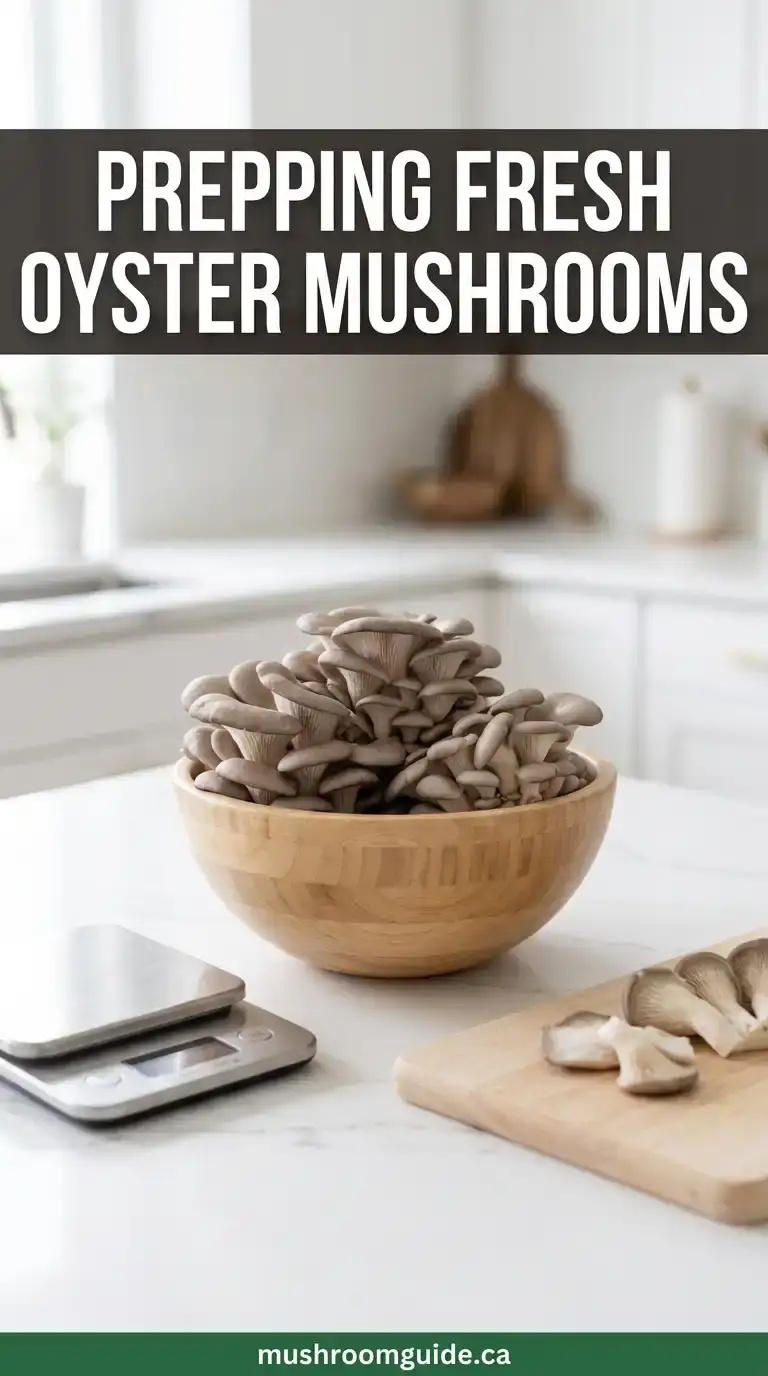
“Protein in oyster mushrooms” is one of the fastest-rising mushroom queries in Canada — up roughly 400% over the past five years. The question lives at the intersection of three trends: plant-based eating, home cultivation, and the general nutrition-tracking everyone is doing now.
Here’s the complete answer, with numbers from peer-reviewed nutrition data, and an honest take on what those numbers mean in practice.
TL;DR
- ~3.3 g protein per 100 g raw oyster mushrooms. Cooking drives off water, so the same mushrooms measure higher per 100 g once cooked — how much higher depends entirely on how far you cook them down.
- A complete protein — contains all nine essential amino acids, which is unusual for a non-animal food.
- By weight, less protein than beans, lentils, tofu, or chicken.
- By calorie, surprisingly competitive — about 25–30% of calories in oyster mushrooms come from protein.
- Not a primary protein source for most people. A useful contribution; not a replacement for legumes, tofu, eggs, or meat.
The actual numbers
Protein per 100 g raw, from USDA FoodData Central:
| Mushroom | Protein per 100 g raw |
|---|---|
| Oyster mushrooms | 3.3 g |
| White button (and cremini, portobello — all Agaricus bisporus) | 3.1 g |
| Enoki | 2.7 g |
| Shiitake | 2.2 g |
| Maitake | 1.9 g |
King oyster, lion’s mane and chestnut are missing from that list on purpose. USDA’s coverage of specialty mushrooms is patchy — king oyster is partial, lion’s mane has no dedicated entry, and Pholiota adiposa has none at all. Figures circulating for them come from secondary sources we have not been able to check, so we would rather show five numbers we can stand behind than nine that look tidier.
Two things stand out:
- Oyster, button, cremini and portobello are essentially tied around 3 g per 100 g. Cremini and portobello are the same species as the white button at later stages of maturity, so that is less of a coincidence than it looks.
- Shiitake sits lowest of the five, and is grown for flavour rather than for protein.
What 100 g of mushrooms actually looks like
It’s not a lot — that’s the punchline. 100 g of cooked oyster mushrooms is about:
- One medium cluster (a typical store clamshell holds 150–200 g raw, which cooks down to 100–140 g)
- A heaping cup in a stir-fry
- Two side-dish portions off a 5-gallon bucket grow
So when a recipe says “1 cup of cooked oyster mushrooms,” you’re getting about 3 g of protein — roughly the same as one large egg white.
How it compares to other protein sources
Per 100 g of the food as eaten:
| Food | Protein (g) | Calories | Protein % of calories |
|---|---|---|---|
| Chicken breast (cooked) | 31 | 165 | 75% |
| Beef (ground, cooked) | 26 | 215 | 48% |
| Salmon (cooked) | 25 | 206 | 49% |
| Greek yogurt (plain, 0%) | 10 | 59 | 68% |
| Eggs (boiled) | 13 | 155 | 33% |
| Lentils (cooked) | 9 | 116 | 31% |
| Black beans (cooked) | 9 | 132 | 27% |
| Tofu (firm) | 17 | 144 | 47% |
| Tempeh | 19 | 192 | 40% |
| Oyster mushrooms (raw) | 3.3 | 33 | ~40% |
| Almonds | 21 | 579 | 14% |
| Quinoa (cooked) | 4.4 | 120 | 15% |
By weight, oyster mushrooms have ~10% the protein of chicken breast and ~⅓ the protein of cooked lentils. By calorie, they’re competitive — the protein-to-calorie ratio is similar to eggs and lentils.
Practical implication: mushrooms are a contribution to your protein, not a primary source. If you’re plant-based, your main protein should still come from legumes, tofu, tempeh, seitan, or whole grains. Mushrooms supplement.
Is it complete protein?
Yes — and this is genuinely uncommon for plant-source foods.
A “complete” protein contains all nine essential amino acids that the human body cannot make itself: histidine, isoleucine, leucine, lysine, methionine, phenylalanine, threonine, tryptophan, and valine.
Animal proteins are typically complete. Most plant proteins are limited in one or more essential amino acids (rice is low in lysine; beans are low in methionine; etc.), which is why combining plant proteins is a common nutrition strategy.
Oyster mushrooms contain all nine essential amino acids in measurable amounts. They’re also reasonably balanced — no single amino acid is dramatically deficient relative to the others.
Some context, though: a “complete” protein in small total amounts is still small total amounts. The completeness of oyster-mushroom protein matters more for variety than for hitting a daily protein target.
What about the “high protein” marketing claims?
You’ll occasionally see oyster mushrooms marketed as “high protein” or “30% protein.”
The 30% number is real — but it’s 30% of dry weight, not 30% of fresh weight. Fresh oyster mushrooms are 88–92% water. When you remove the water (e.g., dehydrated mushroom powder), you concentrate the protein.
This is technically accurate but practically misleading. You don’t eat dry mushroom powder by the 100 g.
The honest framing: oyster mushrooms are a good protein source per calorie, a modest protein source per gram of fresh food, and a reasonable addition to a plant-based diet — not a primary source.
How to actually get more protein from oyster mushrooms
A few practical strategies:
1. Cook them down and concentrate
A pan of oyster mushrooms loses ~30% of its mass to water evaporation during cooking. The protein doesn’t go anywhere; it just gets denser per bite. 300 g raw → 200 g cooked = 6.6 g protein in your finished serving.
2. Pair with a higher-protein co-ingredient
Common pairings that push the protein content of a “mushroom dish” up:
- Mushrooms + tofu (e.g., stir-fry) — 200 g tofu adds 34 g protein
- Mushrooms + lentils (e.g., shepherd’s pie filling) — 1 cup lentils adds 18 g
- Mushrooms + eggs (e.g., frittata) — 4 eggs add 28 g
- Mushrooms + cheese (e.g., stuffed portobello) — 100 g cheese adds 25 g
3. Use dried oyster mushroom powder as a seasoning
Dehydrated, ground mushrooms can be sprinkled into soups, stews, pasta water, and seasoning blends. By weight, they’re ~25% protein. By volume in a finished dish, they add a small but real protein contribution along with massive umami.
4. Choose king oyster when protein matters
King oyster is usually the pick here — less for a protein figure than for a dense texture that holds up to heavy preparation, and because it mimics animal protein better than anything else on this list. Figures circulating for its protein content sit a little above oyster, but USDA’s coverage of the species is partial and we have not been able to check them, so we are not going to put a number on it.
How home growing affects the numbers
Mushrooms grown at home on Masters Mix, pasteurized straw, or supplemented hardwood sawdust have similar protein content to commercial mushrooms. There isn’t a meaningful nutritional benefit to growing your own from a protein standpoint.
What changes when you grow your own:
- Freshness — measurably better flavour
- Variety access — pink, blue, yellow oysters and chestnut mushrooms are nearly impossible to buy in Canada
- Cost per gram — lower after your first 1–2 grows
- Spore safety — your responsibility (wear an N95!)
Bottom line
Oyster mushrooms contain about 3.3 g of complete protein per 100 g cooked — modest by weight, decent by calorie, and a useful addition to a plant-based diet. They’re not a primary protein source for anyone, but they meaningfully contribute when paired with legumes, tofu, eggs, or other high-protein co-ingredients.
If protein density is your priority among mushrooms, king oyster slightly edges out regular oyster. If you’re growing your own, the yield-per-bag is roughly equivalent in protein terms.
The “30% protein” marketing line is technically accurate (on a dry- weight basis) and practically misleading (you don’t eat them dry).
Want to grow your own? Start with How to grow oyster mushrooms in Canada. Want a high-protein cooking application? Air fryer oyster mushrooms — 6 g protein per crispy basketful, no animal products required.
Choosing between species? King oyster vs oyster vs lion’s mane — how the three compare on texture, yield and what they are actually good for. Storing your harvest? How to store oyster mushrooms — protein content holds up through dehydration, freezing, and pickling.